
Strength in Balance: Paternity, Wellbeing and Inclusive Workplaces
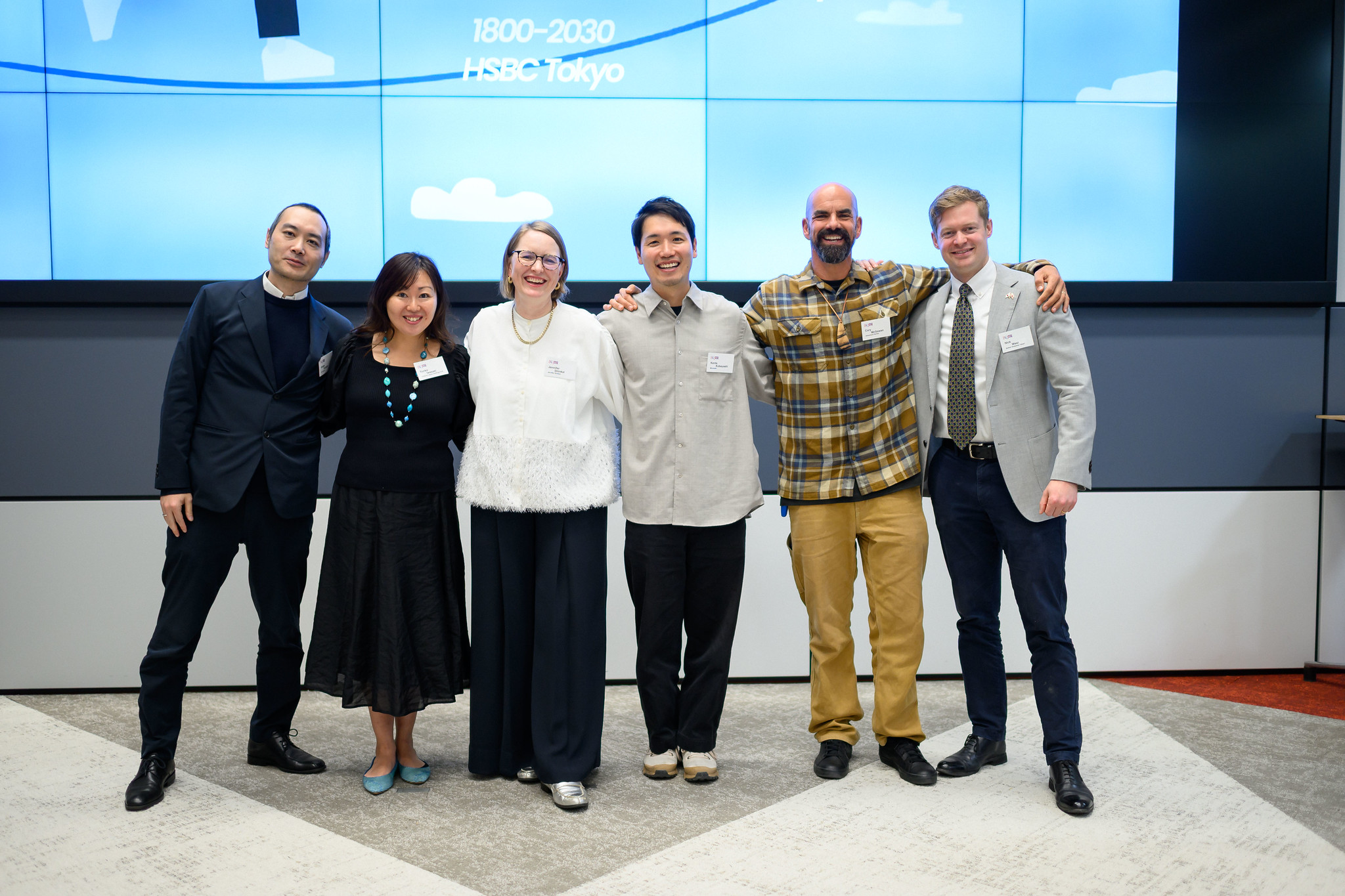
Men’s mental health and work-life balance were the focus of the British Chamber of Commerce in Japan’s inaugural event in mid-November to mark International Men’s Day, a global annual observance designed to highlight men’s positive contributions and address the issues they face.
Hosted by HSBC at their Nihonbashi office, the event explored the uptake of paternity leave in Japan, including efforts by companies and individuals to support inclusive workplaces through awareness-raising and promotion of role models.
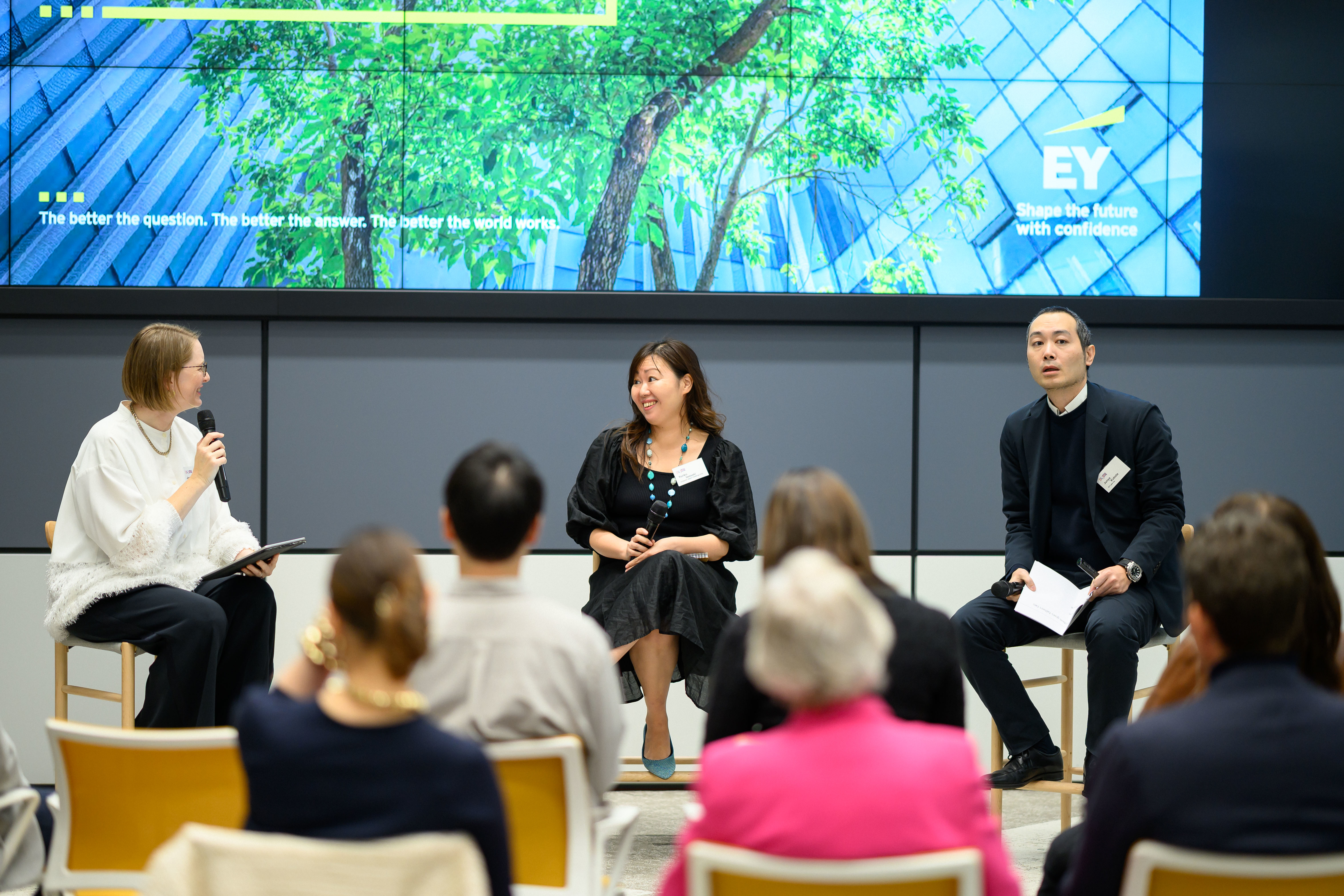
Moderator Jennifer Shinkai, ikigai and inclusion coach, welcomed attendees with an introduction to the six pillars of International Men’s Day: to promote positive everyday male role models, to celebrate men’s positive contributions, to focus on men’s health and wellbeing, to highlight discrimination against men, to improve gender relations while promoting gender equality and to create a better world where people can reach their full potential.
Legal protections
Junya Kubota, associate partner at EY Law Co., then outlined the Japanese government’s revisions to parental leave in 2025, which include new responsibilities for medium-sized employers. Under the Child Care and Family Care Leave Act, working fathers are entitled to two kinds of leave: childcare at birth leave, available within eight weeks of the birth, and childcare leave, which is generally available until the child becomes one year old but can be extended until the child is two under certain conditions, such as unavailability of daycare.
Working fathers can take up to four weeks of childcare at birth leave in total, which can be split into two segments. The childcare leave can also be taken in two segments. These two types of leave are separate under the law, added Kubota, meaning that taking childcare at birth leave does not affect later uptake of childcare leave.
Under the childcare leave benefit paid from employment insurance, full-time fathers can receive 67% of their wages for the first 180 days of their childcare leave and 50% of their wages for the remainder of the period. However, as benefits are not taxed and social insurance premiums are waived during childcare leave, take-home pay can range between 60–80% during childcare leave. Moreover, from April 2025, a newly introduced benefit can bring net take-home pay close to 100% for up to the first 28 days of childcare leave, subject to eligibility.
Employers in Japan have a statutory duty to provide information on childcare leave and its benefits when they learn of the pregnancy or childbirth of one of their employees or his/her spouse, explained Kubota. Rather than wait to hear from their employee, they must confirm their employee’s intention regarding leave 'proactively.' In addition, companies with 300 or more employees must disclose the rate of their male employees’ uptake of childcare leave.
Considering the provisions under the law, some speakers noted that the main barrier to taking parental leave is new fathers’ concern that their absence could not be easily managed. For example, their employer may find it difficult to cover their position, while their colleagues may be unequipped to carry out highly individualised tasks or unable to add more duties to an already heavy workload.
However, sharing processes and protocols among staff across departments can make it easier for jobs to be shared in the case of an employee taking paternity leave, said Kubota. Yuriko Iwasaki, head of communications at Unilever Japan Holdings G.K., meanwhile, suggested companies use a temporary staffing agency to onboard one or more people who can support the person’s role while they are on leave. Unilever, which has 400 employees in Japan, also considers parental leave as an opportunity for job rotation and for staff to take on new challenges.
Iwasaki added that the most important approach, though, involves fostering a supportive company culture. 'If the person’s relationship with their manager is good and flat, it allows them to talk about their needs and life stage during daily conversation,' she said, noting such an environment can empower new fathers to take leave and also help companies to become more resilient to change.
In addition, Unilever offers the same work benefits to every employee, regardless of gender, and has operated a work style called Work from Anywhere and Anytime (WAA) since 2016. Under the system, employees are eligible to decide their working hours and break times between 5am and 10pm on weekdays and can work outside the office for any reason.

Role models
Next, attendees heard from three working fathers with experience related to paternity leave or engaging with new fathers.
Kenta Kobayashi, senior partner and account manager at Microsoft, shared that he took three months of childcare leave when he became a father, thanks to his 'very supportive team and smooth handover with his manager.' Company efforts included a biweekly call to keep him informed on work matters during his leave.
Being a positive role model starts with simple actions such as language, he said, noting that his wife insists he is 'raising a child with her' rather than 'supporting her' in parenting.
Nick West, head of investment at the British Embassy Tokyo, took six months of childcare leave when his second child was born, enabling his wife to take a shorter maternity leave. Her earlier return to work meant she could continue her progression as a doctor and avoid having to retake a year of work.
'In recent years, a lot of my bosses and peers—both men and women—have been balancing their roles as diplomats and parents. It’s been hugely inspirational and I could take a longer paternal leave because of their support and role modelling,' he said. 'It was fantastic for me to spend time with my family and great for my wife’s career ambitions.'
West added that employees’ use of parental leave can improve the resilience of an organisation by allowing staff to develop new skills and to seize opportunities for advancement.
Cory McGowan, founder and executive leadership coach of Minakami, Gunma Prefecture-based Adventure Partner, said it can be hard for men to express their desire to disconnect from work and spend time with their new child and family. Men need more support to request parental leave and to understand the important role they can play by supporting their family at home full-time, he added.
'Many men define their impact by their work. With a baby, it can be less clear why they matter when their wife is the one breastfeeding. How can we make their impact clear, so they don’t feel like they’re letting their team down or mattering less than they used to?' he said.
McGowan called on attendees to think deeper about the issues that affect them, as well as the connections between a balanced personal and professional life.
In closing, Junko Kubokawa, the BCCJ’s diversity, equity and inclusion champion, invited members and member companies to get involved in the BCCJ Diversity, Equity and Inclusion Working Group. Launched in 2024, this group brings together members to share experiences, address challenges and co-create practical strategies for fostering more inclusive workplaces across the UK–Japan business community.